
Massachusetts Criminal History Records
Massachusetts criminal history records are part of the state's Criminal Offender Record Information system, known as CORI. The Department of Criminal Justice Information Services manages this system for the Commonwealth. You can search Massachusetts criminal history online through the iCORI portal, or submit a request by mail. Each of the 14 counties has its own courts where criminal cases are filed and heard. This guide explains how to find, access, and request criminal history information across Massachusetts.
Massachusetts Criminal History Overview
Massachusetts Criminal History and the CORI System
Criminal Offender Record Information, or CORI, is the official state record of all criminal court appearances in Massachusetts for a given person. It covers arrests, detentions, criminal charges filed, court dispositions, convictions, and sentences. Pending cases and active warrants also appear. The system was created under Massachusetts General Laws Chapter 6, Section 167, which defines the full scope of what counts as criminal history information under Massachusetts law.
The Department of Criminal Justice Information Services (DCJIS) serves as the central agency for all criminal history records in the state. Under M.G.L. c. 6, § 167A, DCJIS is responsible for maintaining CORI and setting rules for how records are shared. The agency also handles complaints about improper use of criminal history data. You can reach DCJIS at 200 Arlington Street, Suite 2200, Chelsea, MA 02150, or by phone at (617) 660-4600. The CORI Unit can be reached directly at (617) 660-4640.
CORI does not include every type of record. Sealed and expunged records are not shown. Juvenile records are generally kept private. Out-of-state criminal charges do not appear in the state system. Restraining orders only appear if they were violated and resulted in a criminal charge.
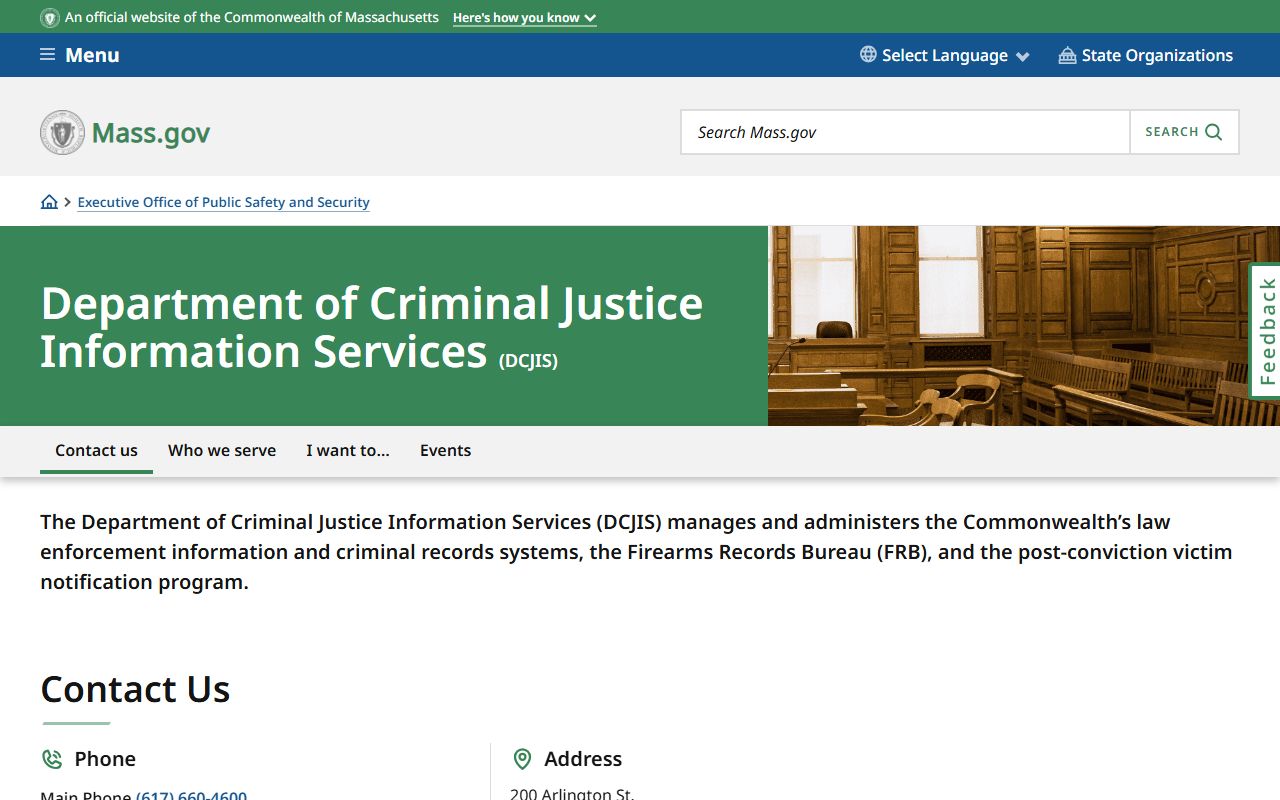
The DCJIS website at mass.gov/orgs/department-of-criminal-justice-information-services is the main hub for criminal history services in Massachusetts, including forms, registration links, policy documents, and guidance on how to work with CORI.
The Massachusetts law about criminal records page on Mass.gov is a solid starting point. It explains who can access criminal history, what a CORI report contains, and what rights individuals have when it comes to their own records. Anyone dealing with criminal history in Massachusetts should read this page first.
The iCORI Portal for Massachusetts Criminal History
The iCORI system is the online tool for requesting and receiving CORI reports. iCORI stands for Internet Criminal Offender Record Information. You can use it to request your own full criminal history or, with proper authorization, request a report on another person. Most iCORI requests are processed within 24 to 48 hours. The portal is available around the clock, but processing only happens on business days.
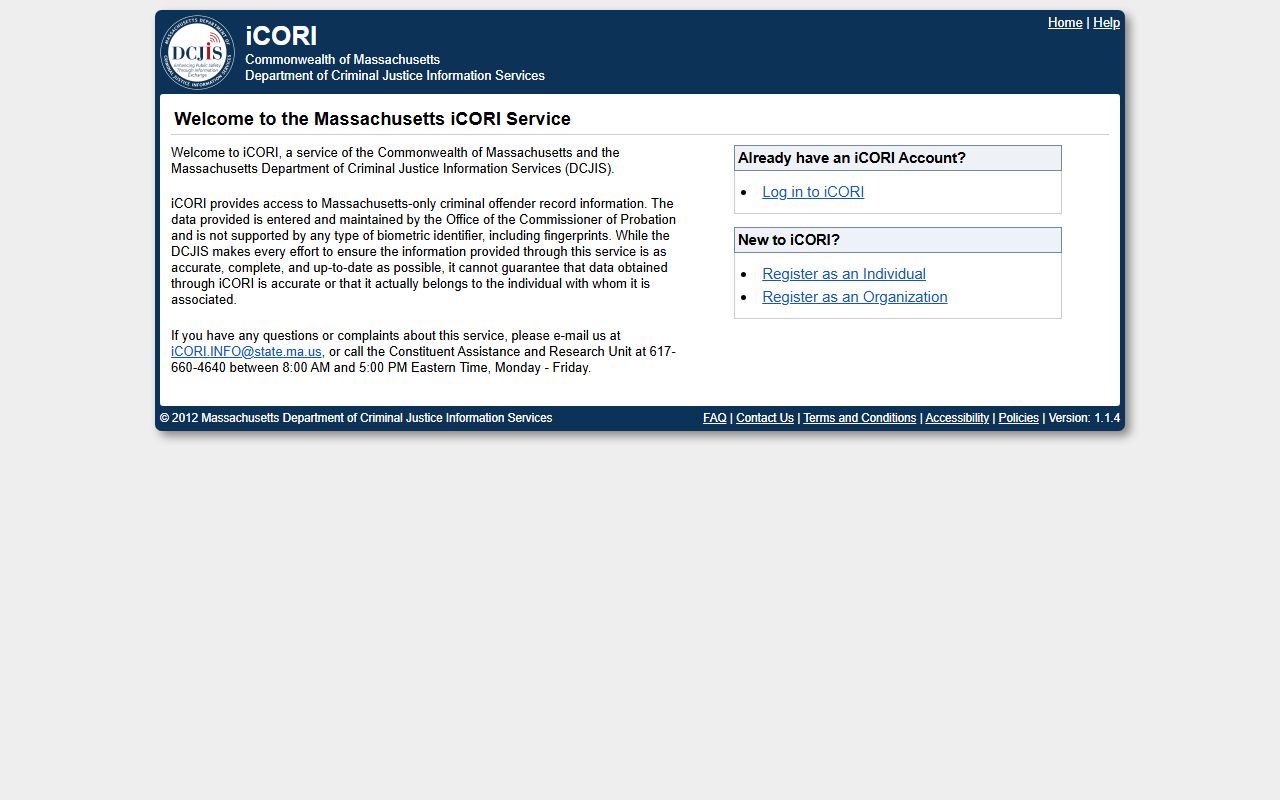
The iCORI portal shown above is available at icori.chs.state.ma.us. This is where individuals and authorized organizations register, log in, and submit criminal history requests online. The portal accepts Visa, MasterCard, American Express, and Discover cards for payment.
To register for iCORI as an individual, you need a valid Massachusetts driver's license or state ID card. You will also need a working email address, your full legal name, date of birth, and current address. Providing the last six digits of your Social Security number is optional but helps ensure an accurate match. Once you submit your registration, you get a confirmation email with an activation link. After your account is active, you log in, pay the fee, and submit your request. Processing usually takes one to two business days.
Organizations must complete an additional authorization step before they can submit requests. This includes reviewing DCJIS training documents and agreeing to the rules for proper use and secure storage of criminal history data. Under M.G.L. c. 6, § 172, unauthorized access to CORI data or improper sharing of records carries legal penalties.
How to Request Your Massachusetts Criminal History
Two main options exist for getting your own criminal history in Massachusetts: online through iCORI or by mail. Online is faster. Mail requests work for those without a Massachusetts driver's license or state ID.
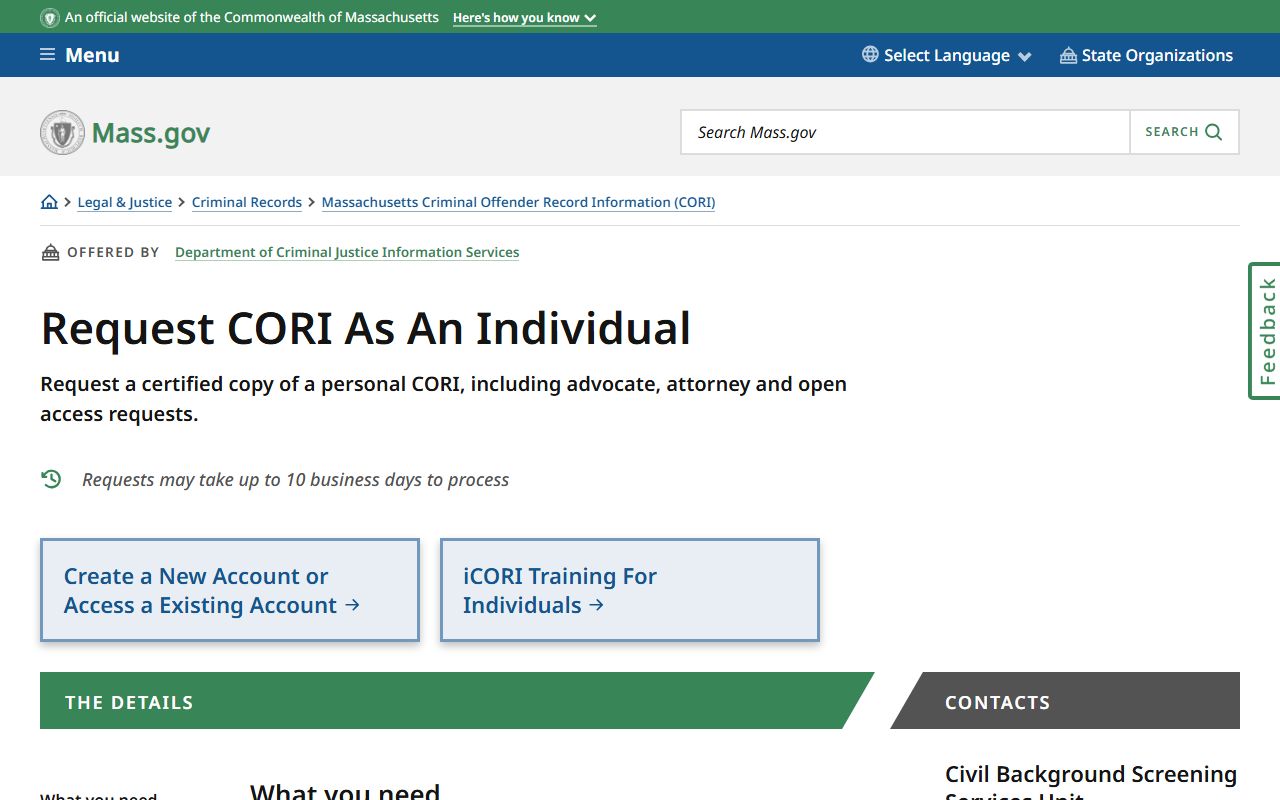
The guide shown above at mass.gov/how-to/request-cori-as-an-individual walks through every step of the CORI request process for individuals. It covers both the online path through iCORI and the mail-in option for those who cannot use the web portal.
For online requests, register and activate your iCORI account, then log in and pay $25 by credit or debit card. Most requests come back within two business days. For mail requests, download the Personal Request Form from Mass.gov. Fill it out fully and sign it in front of a notary public. Include a $25 check or money order made payable to "Commonwealth of Massachusetts." Mail everything to DCJIS, 200 Arlington Street, Suite 2200, Chelsea, MA 02150, ATTN: CORI Unit. Mail requests take up to 10 business days to process.
Legal advocates and attorneys may also request criminal history on behalf of their clients when they have a signed authorization. The same $25 fee applies. Under M.G.L. c. 6, § 172A, DCJIS is authorized to charge the fee for CORI requests, and a fee waiver is available for individuals who qualify based on financial need. Individuals whose income falls at or below 125% of the federal poverty level may file an Affidavit of Indigency to request a waiver.
CORI Access Levels and What They Show
Not every CORI request returns the same data. Massachusetts law creates different access tiers, and what a person can see depends on the type of access they hold. Personal access lets individuals view their own full criminal history. This is the most complete view available to a private citizen, and it shows everything in the record going back to age 17.
Open access, sometimes called public access, is available to media organizations and members of the public who submit requests without personal authorization. These requests cost $50. Open access shows only limited data: misdemeanor convictions from within the past year and felony convictions from within the past two years. Pending charges may also appear. This tier gives a snapshot rather than a full picture. Under M.G.L. c. 6, § 172, the law sets out who may use each level and what they are permitted to view.
Victims and witnesses in criminal cases have their own access rights. Under M.G.L. c. 6, § 178A, they may access certain criminal history information related to their case. This keeps them informed about developments that could affect their safety.
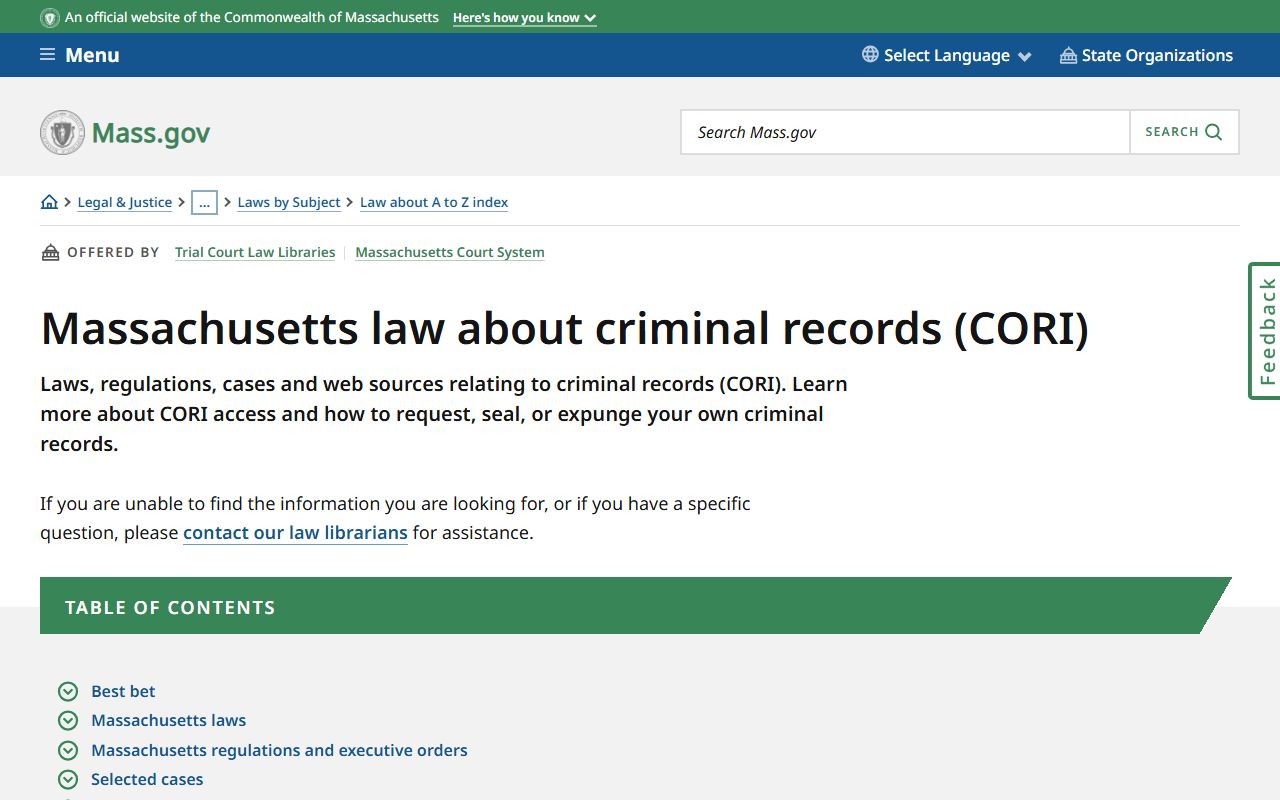
The Massachusetts law about criminal records page shown above at mass.gov gives a full breakdown of the legal framework governing CORI access levels and how each tier works in practice.
Massachusetts Court Records and Criminal History
CORI covers official criminal history data maintained by the state. Court records are a related but separate source of information. The Massachusetts Trial Court maintains case records for all courts across the state. You can search many of these through the Massachusetts Trial Court Case Access portal at masscourts.org. The system is free to use and searchable by name, case number, or docket number.
The Trial Court includes several departments with criminal jurisdiction. The Superior Court handles felony cases and first-degree murder. District Courts handle misdemeanors and felonies with sentences under five years, as well as pre-trial proceedings. The Boston Municipal Court handles criminal matters within Boston's city limits through eight divisions. Each of these courts keeps its own records. The clerk's office at each location can help with in-person records requests. For certified copies, the fee is $2.50 per page. Non-certified copies cost $0.05 per page.
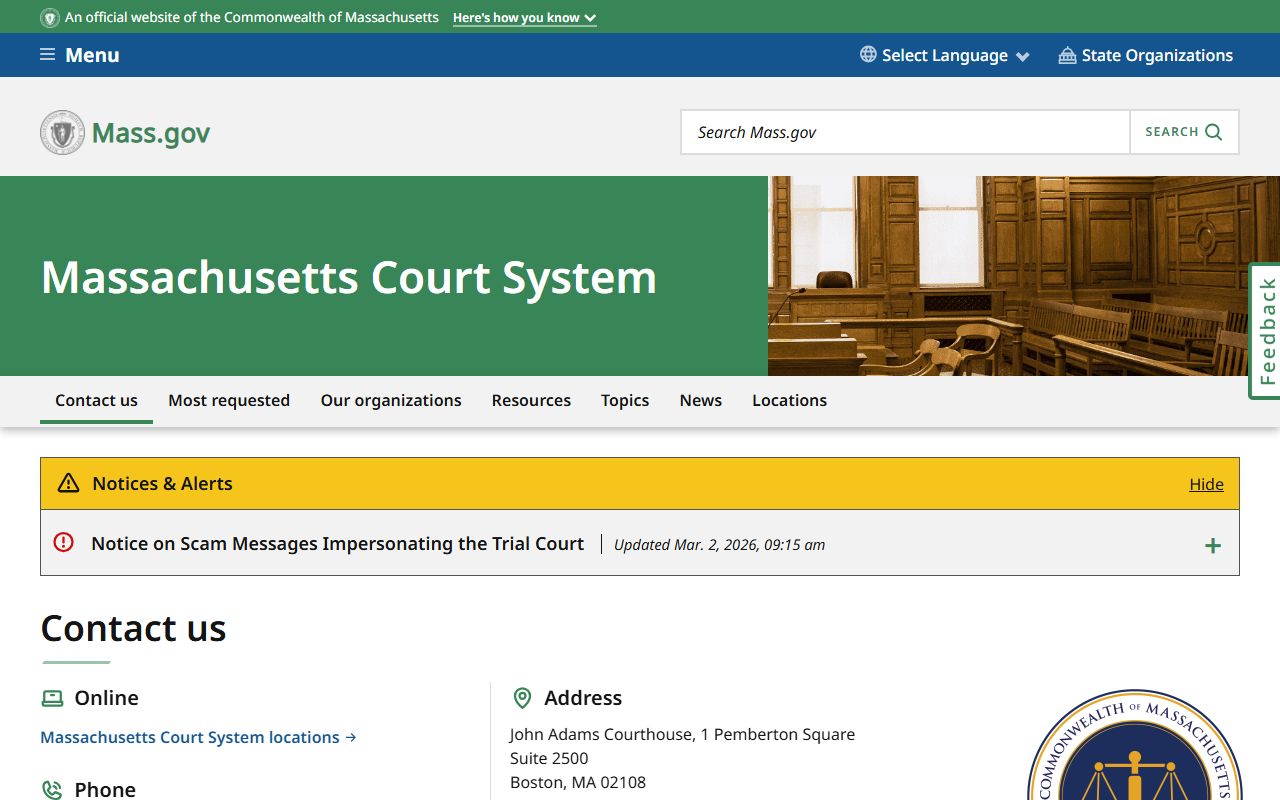
The Massachusetts Court System page shown above is the central resource for locating courts, understanding their jurisdiction, and finding clerk's office contact details. The site also links to the court locator tool and fee schedules.
When you search a case online, you see party names, docket entries, hearing dates, and case status. Not all documents appear in the online system. Some records require an in-person visit to the appropriate courthouse. If you need to find a specific court, use the court system site to look up locations and hours by county or city.
Sealing and Expungement of Massachusetts Criminal Records
Massachusetts law gives people a path to seal or expunge their criminal history under certain conditions. Sealing hides a record from public CORI searches but does not destroy it. Expungement is the full removal of a record from the system. The rules for each are distinct, and not every record qualifies.
Under M.G.L. c. 276, § 100A, you may petition to seal a misdemeanor conviction after five years from the date of conviction or release, whichever comes later. Felony convictions require a ten-year wait. Non-conviction records, such as dismissed cases or not-guilty verdicts, can be sealed immediately with no waiting period. Once sealed, those records do not appear in standard CORI checks. The petition is filed in the court where the case was originally heard. There is no filing fee. After the petition is granted, DCJIS updates the system, though it may take a few weeks for the change to take effect.
Expungement is available in a narrow set of circumstances under M.G.L. c. 276, § 100C. It applies to cases involving misidentification, cases where the offense is no longer a crime, and certain youthful offender situations. An expunged record is fully destroyed and does not show up anywhere. The process is more involved than sealing and requires a court hearing.
Note: Sealed records may still be visible to certain agencies, including law enforcement, in specific circumstances even after a successful sealing petition.
Browse Massachusetts Criminal History by County
Each of Massachusetts's 14 counties has its own courts and law enforcement offices. Criminal charges are filed at the county level, and records flow from local courts into the state CORI system. Browse by county to find court addresses, clerk contact information, and resources specific to each area.
Criminal History Records in Major Massachusetts Cities
Criminal cases in Massachusetts are tied to the city or town where the offense took place. Charges are filed in local district or superior courts based on location. Use the links below to find criminal history resources for major cities across the state.